


w3c
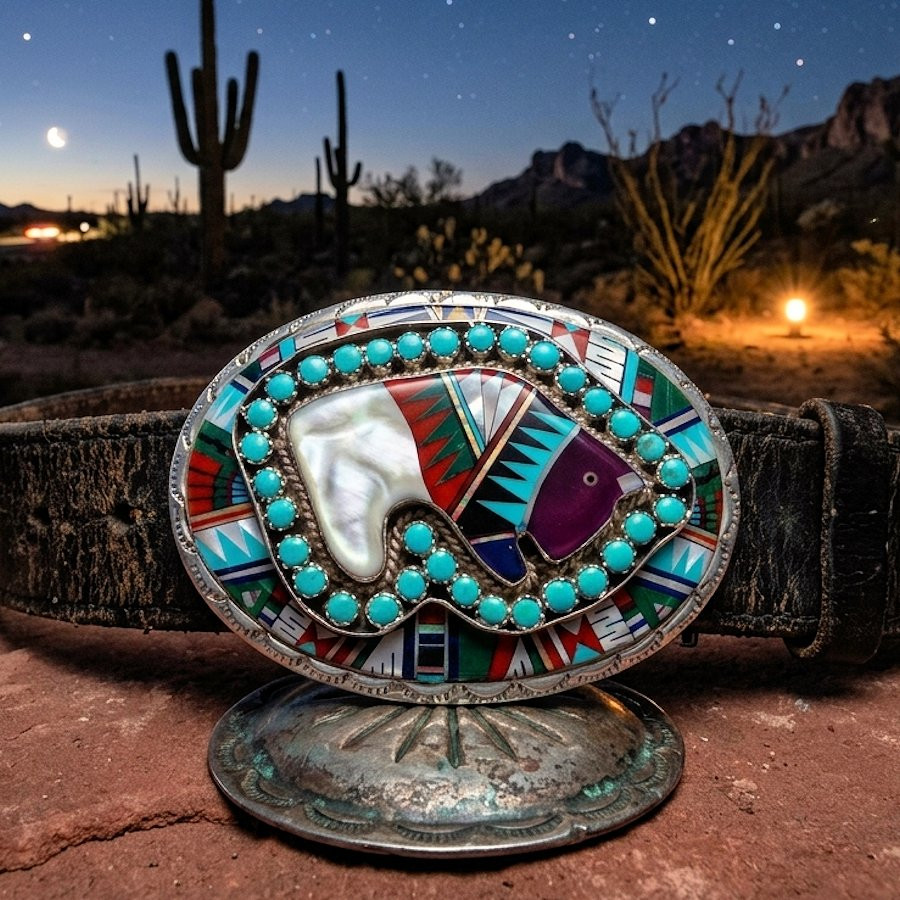
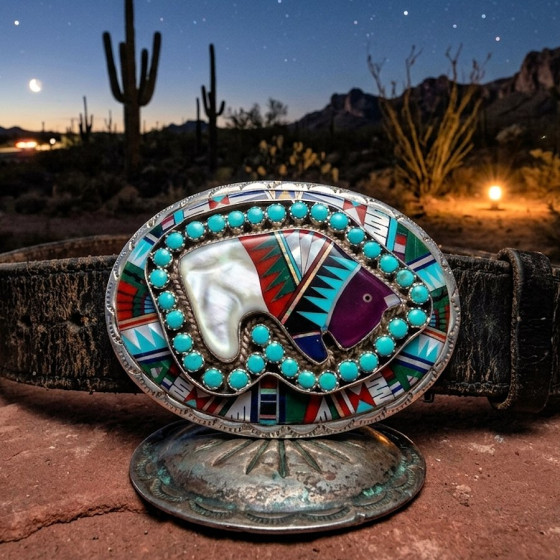

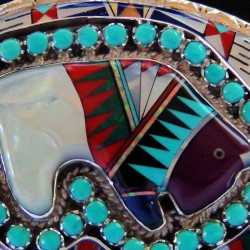
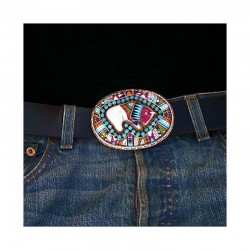
Sterlingsilver Belt buckle with mother of pearl, Turquoise cabochons and semi-precious Inlay.
Measurements are :
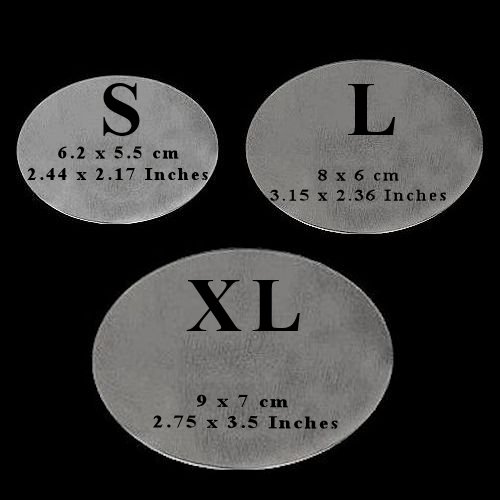
S West - East 7 cm x North - South 5.5 cm - It will fit belts 1-1/4” or less - Weight 50 g.
L West - East 8.2 cm x North - South 6.5 cm - It will fit belts 1-1/4” or less - Weight 50 g.
Choose your Size S or L
Option Buckle stamped on the back Motif of your choice
 Garanties sécurité
(à modifier dans le module "Réassurance")
 Politique de livraison
(à modifier dans le module "Réassurance")
 Politique retours
(à modifier dans le module "Réassurance")
Size
Option: Stamped buckle on the back with your choice of design

Make a bold statement with this exceptional Bison belt buckle, finely engraved in silver and enhanced with delicate mother-of-pearl inlays and genuine stones. A true handcrafted piece inspired by Western and Native American design, it features a majestic bison — a symbol of strength, freedom and harmony with nature. Every detail is hand-worked to deliver striking depth and timeless shine.
Perfect for dressing up a leather belt, it becomes the signature accessory for lovers of Western fashion, ethnic jewelry and one-of-a-kind pieces. An ideal gift for men or women seeking authenticity and character.
Highlights: genuine silver · natural mother-of-pearl inlays · decorative stones · handcrafted · Western/Native American style · refined finish.
For Native American peoples—particularly the tribes of the Great Plains—the bison is a universal symbol of abundance, resilience, strength, and spiritual connection to Mother Earth. As a supremely sacred animal, it represents life itself, for it provided everything necessary for the communities' survival.
Abundance and self-giving: The bison did more than just feed the people. Its meat, hide, bones, and horns were fully utilized to create clothing, tipis, tools, and ritual objects. It thus embodies absolute generosity and the spirit of sharing.
Endurance and strength: Capable of surviving the harshest winters on the American plains, the bison serves as a totem of perseverance, groundedness, and resilience in the face of adversity.
Community spirit: Within the herd, the protection of the weak and the young is a collective effort. The bison reminds us of the importance of mutual aid and solidarity for the group's survival.
Gratitude and balance: Hunting the bison required profound rituals of respect. Native Americans took only what was strictly necessary, honoring the animal's spirit for its sacrifice. It teaches respect for the cycles of nature.
The birth of a white bison is an extremely rare event. In traditions such as that of the White Buffalo Calf Woman among the Lakota, the appearance of a white bison is the most powerful spiritual symbol. It heralds a time of peace, healing, harmony, and renewal for all nations.
In the Native American cultures of the Southwestern United States—specifically among the Hopi, Navajo, and Zuni peoples—the Kachina (or Katsina) embodies spirits from both the visible and invisible worlds. Kachinas represent the vital forces present in all things, such as rain, the sun, the wind, animals, plants, and ancestors.
Kachinas are represented in three complementary forms during rituals:
These are the invisible forces of nature—such as rain, the sun, wind, fire, animals, or ancestors—that bring health, fertility, and abundant harvests.
For six months of the year, from the winter solstice until July, men from the village don masks and costumes during sacred ceremonies to physically embody these spirits.
Traditionally carved from cottonwood roots, these colorful figurines are given to children—especially young girls—at the end of festivals to teach them about mythology and help them become familiar with the spiritual world.
Chat with us on WhatsApp
