


w3c
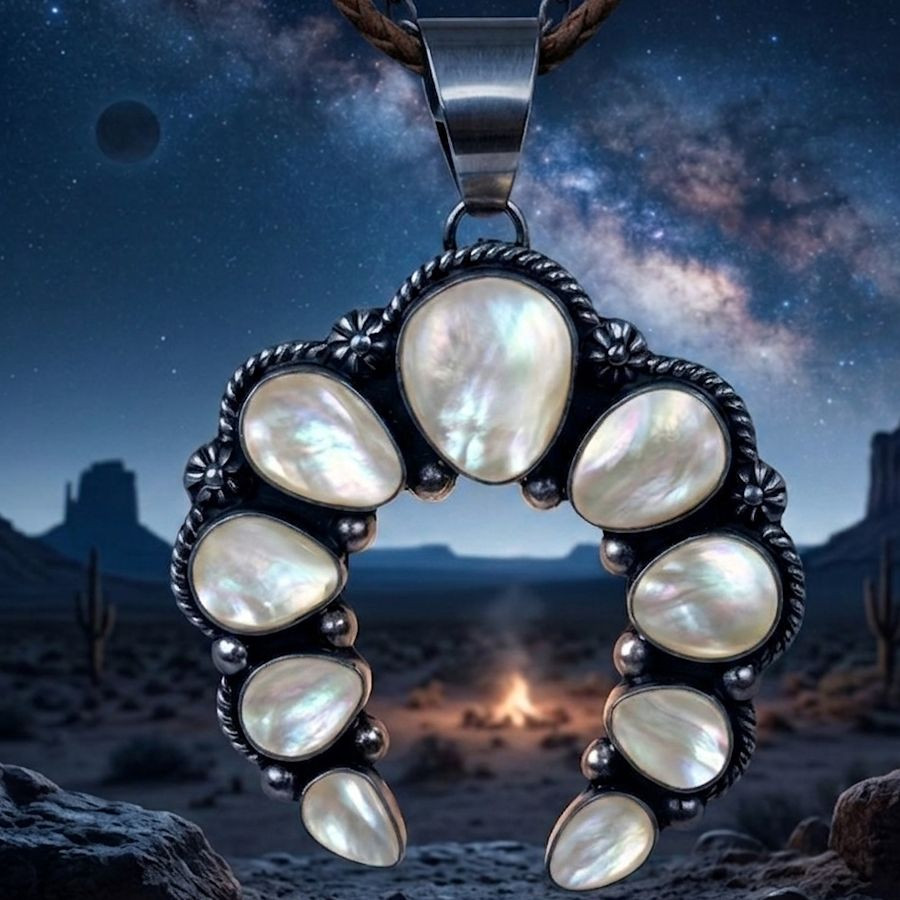
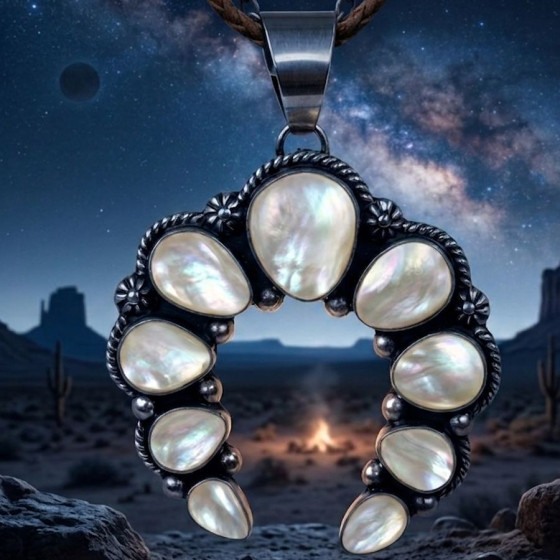
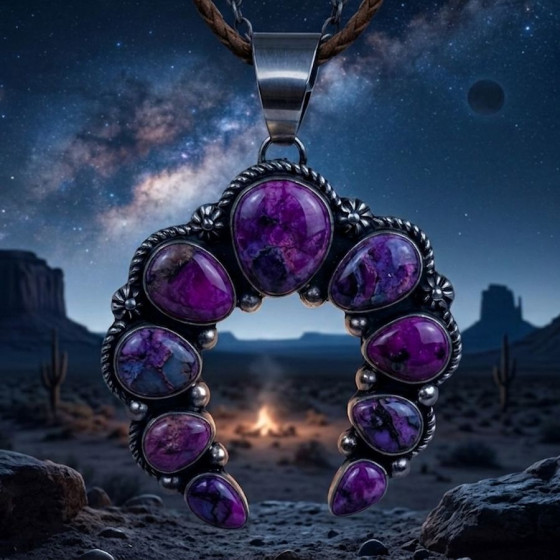

Sterling silver pendant, entirely hand-chiseled and set with turquoise or another stone of your choice.
Dimensions
S A 4 cm x W 3 cm x D 3.5 cm – Weight 15 g
L A 6 cm x W 4 cm x D 3 cm – Weight 25 g
XL A 7 cm x W 6 cm x D 5.5 cm – Weight 40 g
 Garanties sécurité
(à modifier dans le module "Réassurance")
 Politique de livraison
(à modifier dans le module "Réassurance")
 Politique retours
(à modifier dans le module "Réassurance")

The Naja symbol (pronounced nuh-yuh) is one of the most famous and recognizable motifs in Native American jewelry, particularly among the Navajo (Diné) people.
The history of the Naja is a perfect example of cultural fusion. Although it is now a major emblem of Navajo craftsmanship, its roots are very ancient and span several civilizations:
Antiquity: The crescent moon symbol was already used in ancient civilizations (such as by the Phoenicians) to represent Astarte, the goddess of fertility. It is also found in the Old Testament.
Moorish and Spanish Influences: The motif was brought to Spain by the Moors (from North Africa). Spanish conquistadors and explorers then adopted it and used Naja pendants as ornaments on their horses' harnesses and bridles.
Navajo Adoption: Through trade (particularly in the late 19th century), Navajo silversmiths learned the art of silverwork from the Spanish and Mexicans and began incorporating the Naja into their own silver creations.
The meaning of the Naja has evolved over time and holds several significances among the peoples of the American Southwest:
Protection: Originally used by the Spanish as an amulet against the "evil eye" to protect the rider and their mount, it has retained a strong connotation of spiritual protection among the Navajo.
Prosperity and Fertility: Its crescent shape evokes the moon and rebirth, embodying ideas of fertility, new life, and prosperity.
Resilience: For the Diné people, this symbol has also become a poetic representation of their ability to overcome hardship and create beauty in adversity.
Chat with us on WhatsApp
