


w3c
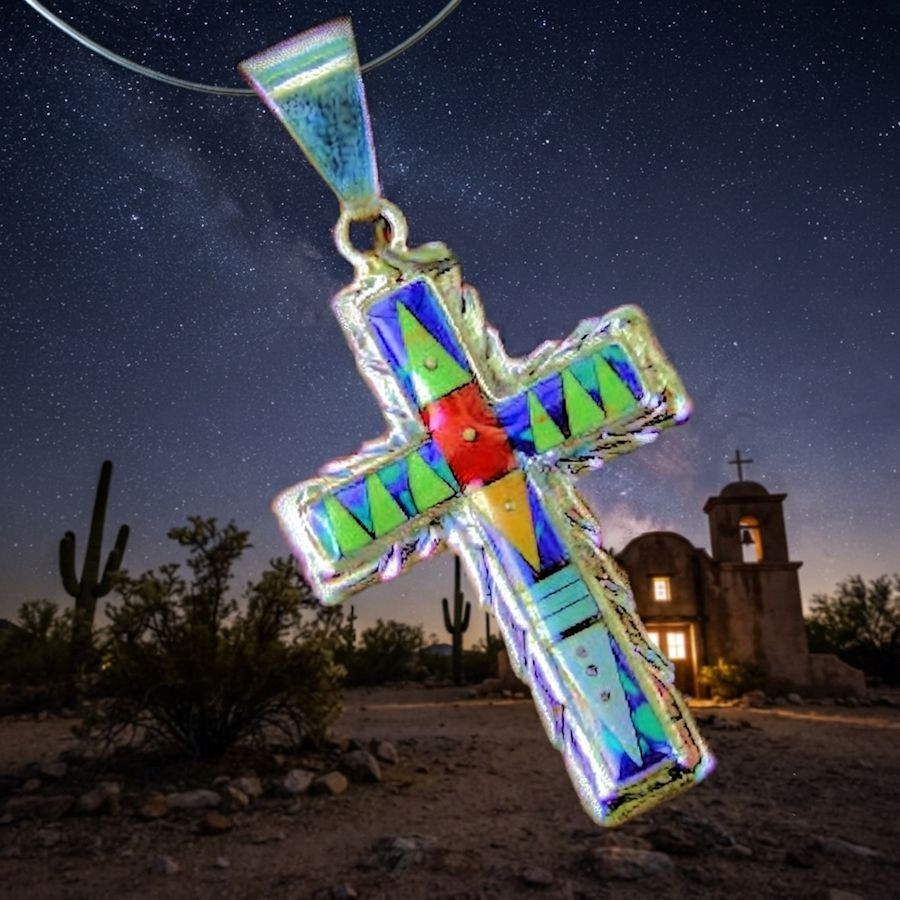
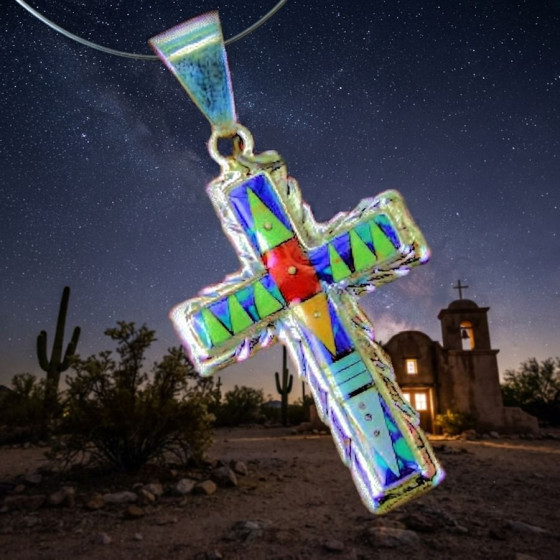
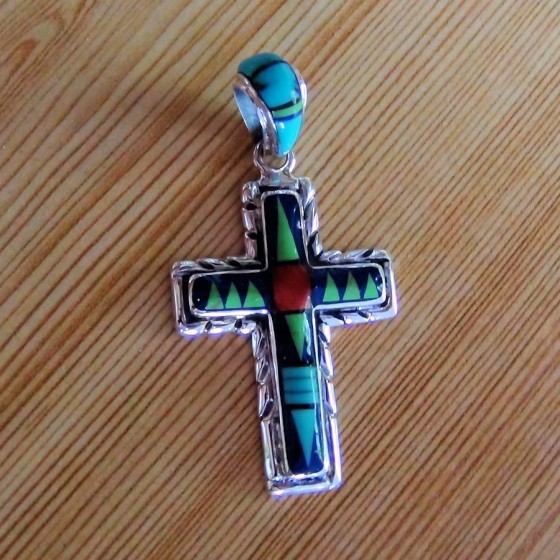
This pendant is set with dozens of small stones cut and patiently assembled. It is 925 silver or Sterling Silver -
3 Sizes To Choose From
S A 3.5 cm B 2.5 cm C 2.2 cm - Weight 8 g.
L A 5 cm B 4 cm C 2.6 cm - Weight 15 g.
XL A 6 cm B 5 cm C 2.8 cm - Weight 30 g. - Weight 8g.
 Garanties sécurité
(à modifier dans le module "Réassurance")
 Politique de livraison
(à modifier dans le module "Réassurance")
 Politique retours
(à modifier dans le module "Réassurance")

When Catholic and Protestant missionaries imposed the Latin cross, several Indigenous peoples incorporated it, merging the Christian message with their own myths. Among the Zuni, a Pueblo people of New Mexico, the relationship with the Christian cross is particularly fascinating. It perfectly illustrates how a symbol imposed by Spanish missionaries as early as the 16th century was completely reappropriated to become a good luck charm and a masterpiece of craftsmanship.
Under Spanish colonization, the Zuni were forced to make or wear Christian crosses. Over time, they transformed this constraint into a unique artistic expression through silverwork.
Today, the Zuni Cross is world-renowned in jewelry, but it has been stripped of its tragic or purely Catholic meaning to become a symbol of protection and reconnection with nature. The inlay technique: Zuni artisans meticulously break down semi-precious stones and insert them into the silver structure of the cross.
The symbolism of colors: Each stone added to the cross reintroduces Zuni mythology. Turquoise represents Father Sky and water, red coral recalls Mother Earth, and mother-of-pearl (or black mother-of-pearl) evokes sacred elements.
The "Coptic" or "Pueblo" style: Their pendants often combine the shape of the Latin cross with stylized hearts or geometric patterns that subtly recall the silhouette of a dragonfly or the sun.
Chat with us on WhatsApp
